Finishing sooner than you wanted can be frustrating, but the experience alone does not explain why it happened or whether it represents premature ejaculation. A calmer review looks at several dimensions together: how often it happens, whether you feel able to delay, when the pattern began, how much distress it causes, and what else was happening physically or emotionally.
Start with the experience, not a label
“I finished too fast” is a real description of disappointment. It is not yet a clinical conclusion.
The AUA/SMSNA guideline describes premature ejaculation in terms of ejaculation before or shortly after penetration, a lack of perceived control, and related distress (Journal of Urology guideline abstract). EAU guidance similarly recommends assessing estimated latency, perceived control, distress, and interpersonal difficulty rather than relying on one measure alone (European Association of Urology).
That wider view matters because two men can report a similar duration and experience it very differently. One may see an occasional variation. Another may describe a repeated loss of control that has started to affect confidence, intimacy, and avoidance.
If you need the basic terminology first, read What Is Premature Ejaculation?.
Review five parts of the pattern
Use this table as a description tool, not a home test.
Dimension
Question to ask
Why it helps
Timing
Did ejaculation occur sooner than I wanted in this context?
Captures the immediate experience without making the number the whole story
Control
Did I feel able to pause, slow down, or delay?
Perceived control is central in professional definitions
Repetition
Was this one event, an occasional pattern, or something that happens nearly every time?
Separates variability from a recurring concern
Onset and context
Has this been present from early experiences, or is it a later change? Does it vary by setting or partner?
Helps distinguish timeline and situational patterns
Impact
Is it causing distress, avoidance, conflict, or loss of enjoyment?
Shows how strongly the concern is affecting life and the relationship
The International Society for Sexual Medicine also emphasizes timing, inability to delay, repetition, and distress in its reviewed explanation of PE (ISSM).
One event and a recurring pattern are different questions
An unusually intense encounter, a long break from sex, a new partner, hurried circumstances, or simple day-to-day variation can make one experience feel different. One event may deserve reflection without becoming evidence that something is permanently wrong.
A recurring pattern deserves more detail. Ask:
· Is the experience repeated across most relevant encounters?
· Has your perceived control changed from your earlier baseline?
· Does it happen in partnered sex, solo sex, or only one specific setting?
· Are you beginning to avoid intimacy or rush because you expect the same result?
For that distinction, use One Early Ejaculation vs a Recurring Pattern. If the pattern is repeated, the next useful distinction is lifelong versus acquired PE.
Do not force one explanation
There is rarely enough information in the phrase “I finish too fast” to identify a cause. ISSM lists psychological, relationship, and biological factors that may contribute, including stress, anxiety, worry about PE, erectile dysfunction, relationship issues, and some health conditions (ISSM). A list of possibilities is not a diagnosis.
Instead of choosing one cause, note what changed around the same time:
· erection firmness or ability to maintain an erection;
· desire, arousal, orgasm, pain, or urinary symptoms;
· sleep, mood, stress, or relationship pressure;
· medicines, supplements, substances, or health conditions; and
· privacy, pace, novelty, or fear of interruption.
The goal is a useful history. A qualified professional can decide which possibilities deserve assessment.
Watch for the rush–worry cycle
Sometimes the fear of finishing early changes the next encounter. A person may monitor every sensation, speed up before an erection changes, or mentally count time. The result can feel less connected and more like a test. Disappointment then feeds the expectation that it will happen again.
This does not prove anxiety caused the timing concern. It shows why the PE and performance-anxiety loop deserves its own review.
A less pressurized intention might be: “I want to notice pace and communicate clearly,” rather than, “I must reach a certain number of minutes.”
Include erection questions when they are present
Premature ejaculation and erectile dysfunction describe different functions, but they can occur together. If you rush because you fear losing an erection, or if worry about timing makes it hard to maintain one, record both experiences instead of forcing everything under one label.
EAU guidance recommends looking for other sexual difficulties, particularly erectile dysfunction, during PE assessment (EAU). Read Can Premature Ejaculation and Erectile Dysfunction Happen Together? for the two-signal worksheet.
Timing concerns can spill into the relationship
The man may feel embarrassed and withdraw. A partner may read the silence as rejection, lack of attraction, or unwillingness to discuss their experience. The disagreement can move beyond the bedroom into affection, sleep, and ordinary conversation.
EAU guidance notes that PE can affect self-confidence and partner relationships and may be associated with distress, anxiety, and shame (EAU). That is a possible pattern, not a prediction for every couple.
Try a factual, no-blame opening:
“I noticed that I finished sooner than I wanted. I do not want to turn it into a judgment about either of us. I would like to understand whether it was one event or a pattern and talk about what would make intimacy feel less pressured.”
When professional support is useful
Consider a qualified healthcare or sexual-health professional when the pattern is persistent, newly changed, distressing, or creating avoidance or relationship strain. Seek earlier guidance when it comes with pain, urinary or pelvic symptoms, a major erection change, injury, or another new health concern.
Bring a short record of onset, repetition, perceived control, context, impact, erection changes, medicines, and relevant health changes. Do not stop prescribed medication on your own.
Where an optional KTRL routine can fit
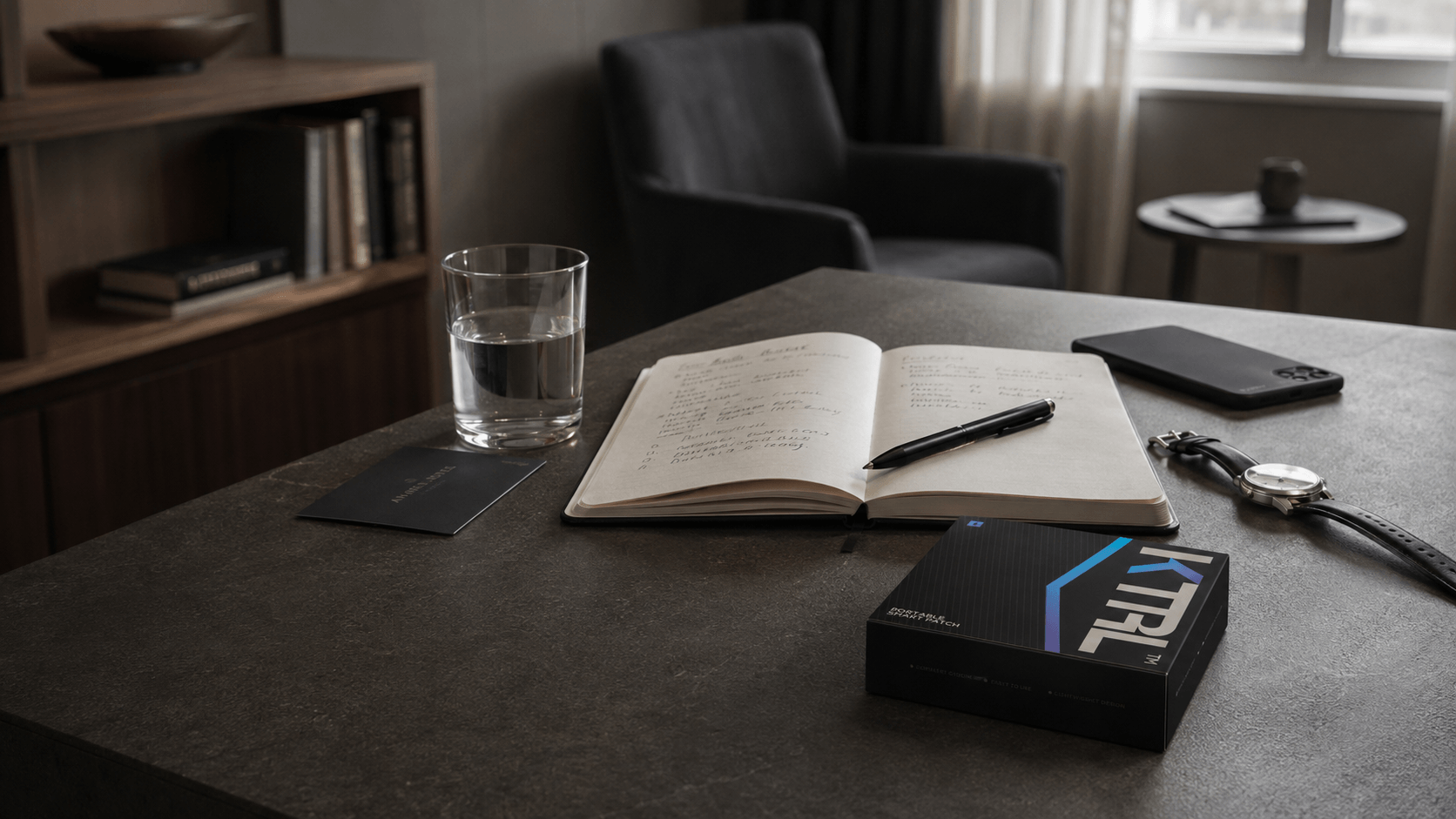
After the health and relationship questions are clear, some adults may want a separate consumer-lifestyle routine centered on sensory rhythm, deliberate pacing, and timing awareness. The discreet male wellness routine guide helps identify that goal. The KTRL private-routine fit guide then explains the self-contained, single-use patch format and how its rhythmic physical sensation can be incorporated into a planned adult session.
Use the email list for future no-shame education and product facts before deciding.
KTRL Portable Smart Patch is a consumer lifestyle product for adult external use; it is not intended to diagnose or treat a medical condition, individual experiences vary, and users should follow the printed instructions and seek qualified professional advice for persistent or distressing concerns.
Frequently asked questions
Does finishing early once mean I have premature ejaculation?
No. One event does not establish a recurring clinical pattern. Review repetition, perceived control, distress, onset, and context before choosing the next step.
Is a specific number of minutes enough to tell?
No single number describes every case or sexual activity. Professional definitions use approximate latency criteria, but control, repetition, negative impact, and context remain important.
Can relationship stress affect how the experience feels?
Yes. Pressure, misunderstanding, or fear of disappointing a partner may intensify distress and self-monitoring. That does not make either partner the cause.
What should I write down before talking to a professional?
Record when the pattern began, how often it happens, your perceived control, whether erections or desire also changed, medicines or health changes, and the effect on you and your relationship.