Contents
When comparing single-use vs reusable intimacy products, choose the experience you want first, then calculate its cost over the number of occasions you expect to use it. Single-use products require fresh units; reusable products spread their purchase price across actual use and may need care or supplies. Neither format is automatically cheaper, more hygienic or better for the environment.
By KTRL | Updated:12 October 2026
Single-use vs reusable: what are you paying for?
The ownership model tells you what you must buy and look after; it does not tell you whether two products offer the same experience. A patch, a massager and a connected accessory can serve different purposes. Compare costs only after checking each product's intended use, instructions and personal suitability.
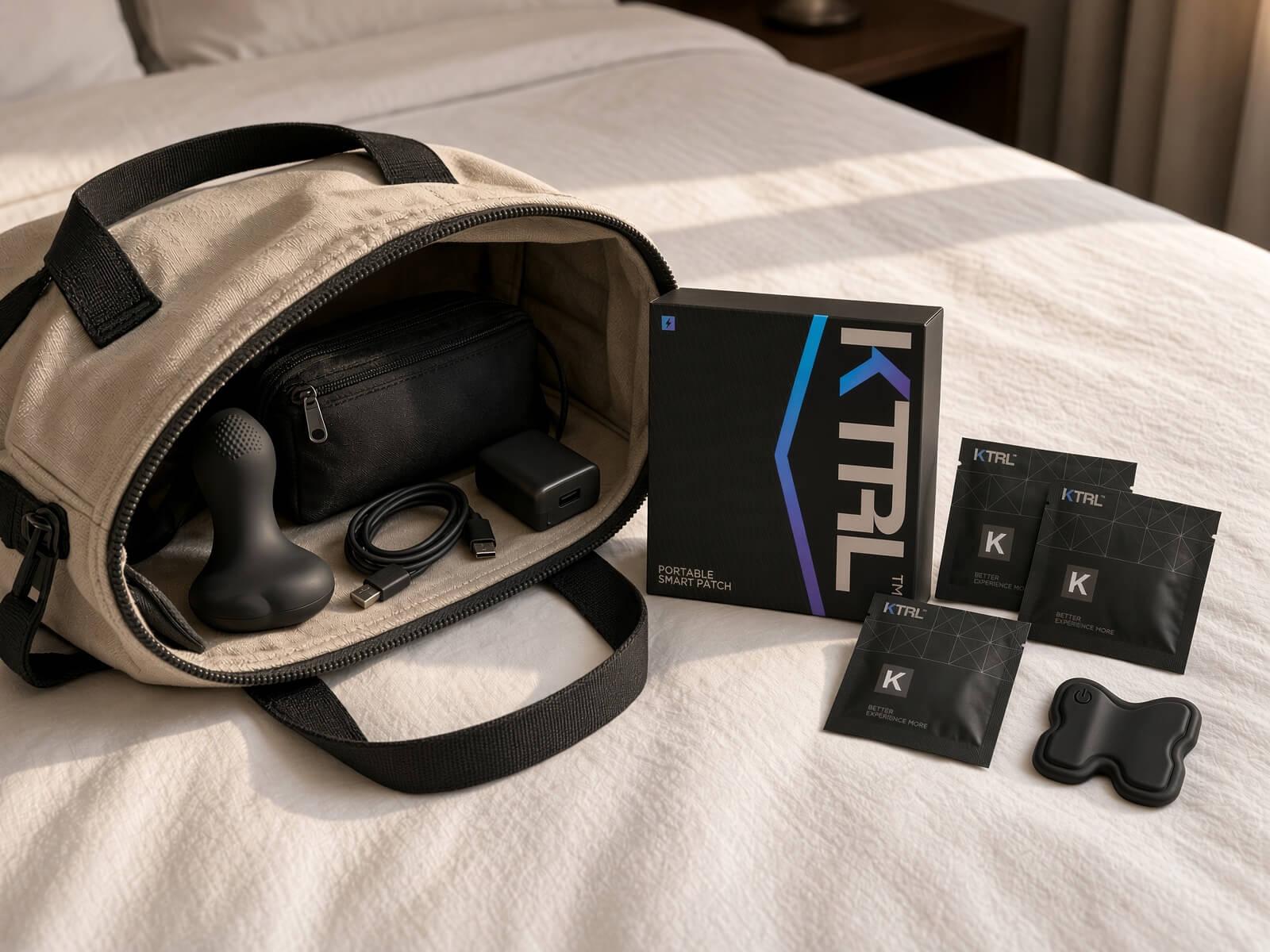
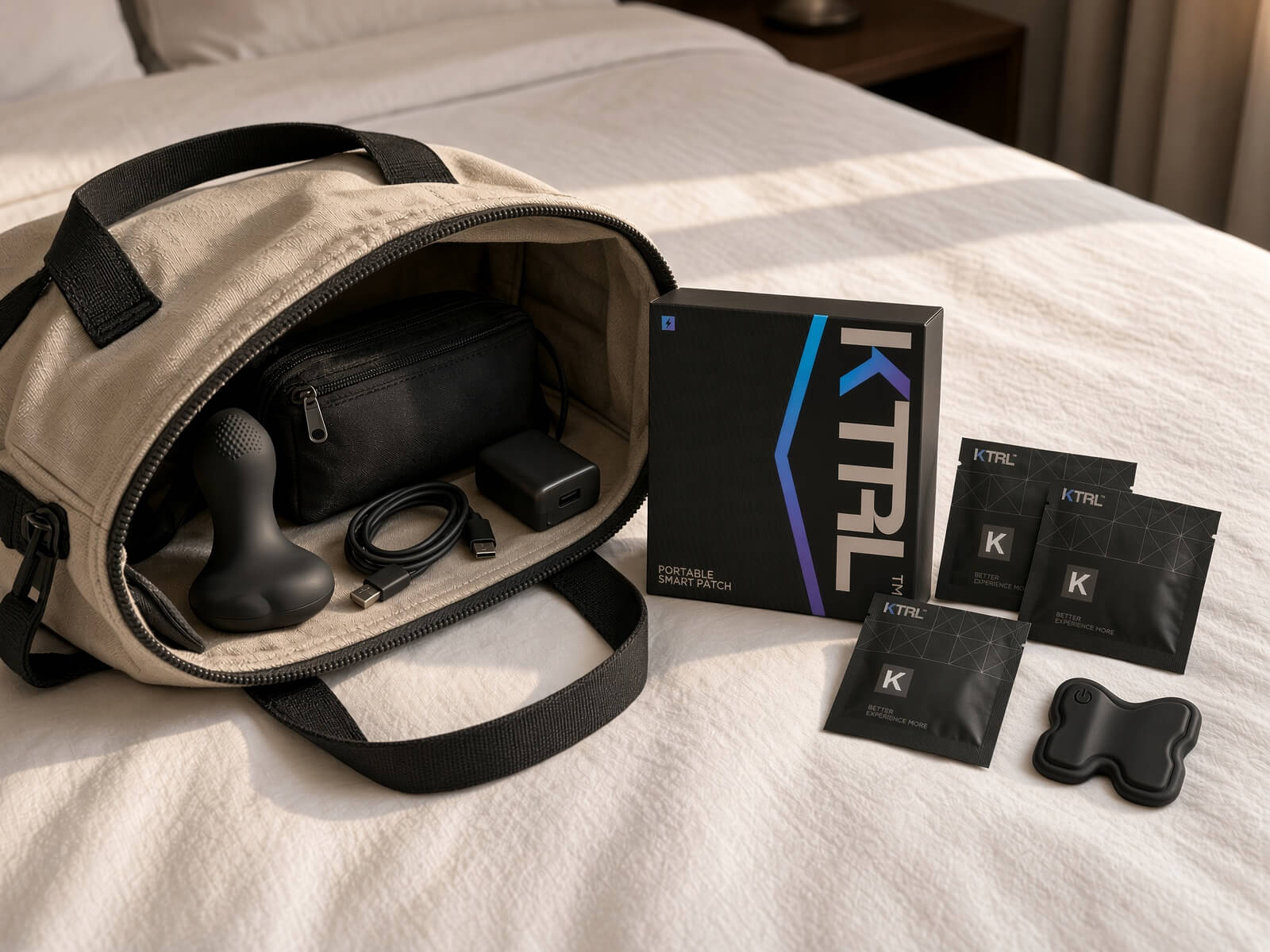
KTRL Portable Smart Patch, model WDC201, is a single-use consumer electronic product for men aged 18–60, inclusive. It creates a rhythmic physical sensation through external skin contact and uses built-in, non-rechargeable power. It is not a medical device and is not intended to diagnose, treat, alleviate, monitor or prevent a disease or medical condition. 1
What to include in an ownership comparisonBudget or care itemSingle-use productReusable productPurchase patternBuy enough fresh units for planned occasions.Pay for hardware, then any required supplies or replacements.Between occasionsStore unopened stock and arrange disposal of used units.Follow the model's cleaning, drying, storage and power instructions.Cost per useDepends on delivered unit cost, supplies and unused stock.Depends on total spending and actual occasions of use.Reusable models differ: do not assume every one needs charging, replacement contact parts or an app account. For differences in intended use between electrical products, read KTRL and reusable electrical devices.
How to calculate cost per use
Use the same time period, currency and cost categories for both options. Start with a realistic number of occasions, such as your expected use over one year.
Single-use: calculate the unit cost and the packs you need
Cost allocated to one occasion = delivered pack cost ÷ usable units in the pack + supplies used that occasion.
Include the purchase price, shipping, taxes and any selected packaging charge. Reduce the usable-unit count if stock expires or is damaged before use. For your cash budget, count the whole packs you must buy; unused units still cost money even if you keep them for later.
With KTRL, one patch is for one use. Finishing early does not create another occasion's allowance. Switching off to adjust placement during the same use does not change that rule. See what KTRL's single-use rule means.
Reusable: divide the total by actual use
Average cost per occasion = total ownership spending during the chosen period ÷ actual occasions of use.
Include the device, required accessories, delivery, taxes, care supplies, replacement parts and power costs that apply to the specific model. Count each charge once. If you allocate the entire purchase price to the first year, say so; this is a budgeting method, not an estimate of depreciation or resale value.
Advertised service life is not the same as your actual use. A device used three times has a different average cost from the same device used 24 times.
A current KTRL price reference
On 12 October 2026, KTRL's English and Spanish product pages listed the single-patch option at USD 34.99. Ordinary delivery was stated as free, with an optional USD 5 plain outer packaging upgrade. That gives a listed subtotal of USD 39.99 with the upgrade, before any additional taxes or local charges that apply. 2
For an order delivered to Mexico, also account for any applicable import duties, local charges and currency-conversion fees. Check the selected pack and final charges before paying. This dated USD reference is separate from the hypothetical MXN model below; it is not a confirmed delivered price in Mexico.
A worked example in Mexican pesos
The cheaper option depends on actual use and on whether you are comparing the cost of units consumed or money paid for whole packs.
Illustrative assumptions, prepared 10 October 2026: a single-use pack costs MXN 360 delivered and contains three usable units, or MXN 120 each. A reusable option costs MXN 900 delivered plus a fixed MXN 120 of supplies for the year, totalling MXN 1,020. The full purchase price is counted in year one, with no additional power, tax, delivery or replacement charges.
These are hypothetical inputs for a Mexico-focused budgeting example, not KTRL prices, competitor quotations, currency conversions or predicted product lifespans. The same fixed annual supply budget is assumed in every row.
Illustrative first-year costs; all amounts in MXNActual occasionsSingle-use cost at MXN 120 per unit usedReusable total costReusable average per occasion3MXN 360MXN 1,020MXN 34012MXN 1,440MXN 1,020MXN 8524MXN 2,880MXN 1,020MXN 42.50On a used-unit basis: 1,020 ÷ 120 = 8.5, so the reusable option has the lower allocated cost from the ninth occasion. The table's usage counts are all multiples of three, so no units remain in those examples.
Whole-pack payments can change the crossover
Four occasions require two three-unit packs: you pay MXN 720, use units worth MXN 480 and keep two unused units. Seven occasions require three packs costing MXN 1,080. Under these assumptions, the reusable option's MXN 1,020 total becomes lower than whole-pack cash spending from the seventh occasion, while the used-unit comparison still crosses at nine.
Recalculate if supplies increase with use, hardware needs replacement, units go unused or delivered prices change. These calculations compare costs; they do not establish equivalent sensations, protection, safety or effectiveness.
Care, privacy, travel and disposal
Choose a routine you can manage as well as a price you can afford. Care tasks and storage needs can affect whether you actually use a product.
Keep care time separate from the price
For reusable products, check what must be cleaned, what must stay dry, where the item can dry privately and whether batteries or contact parts need replacing. Confirm that required replacements remain available. Record these tasks separately rather than assigning them an arbitrary monetary value.
KTRL avoids maintaining hardware for another session, but still requires inspection, clean, dry, intact skin, correct placement and disposal. Its limit is 30 minutes of cumulative powered-on time in the same use. Switched-off time does not count; restarting continues the previous total. This is a use limit, not a promised duration for sex or an indication of an automatic timer. Read the first-use checklist and restrictions.
Plan storage and travel around the actual product
Allow space for unopened units or reusable hardware and its accessories. Consider shared drawers, access to cleaning facilities, packaging and any app account or notifications. A compact product alone does not guarantee privacy.
For travel, list the fresh units, cable, compatible power, batteries or permitted care routine your chosen model needs. Check carrier and destination rules for that product.
Assess hygiene and waste without assuming a winner
A sealed single-use product is not automatically safer or more hygienic than a reusable product maintained correctly. Materials, handling, condition, instructions and personal suitability all matter.
Single use produces a discarded unit each occasion. Reusable products also produce waste through supplies, packaging and eventual replacement. Ranking their environmental impact requires product-specific lifecycle data covering manufacture, transport, maintenance, service life and disposal.
KTRL contains batteries. Follow local requirements for electronic and battery-containing waste; do not assume ordinary household recycling or general waste is suitable everywhere. Do not dismantle, recharge, puncture or burn the patch. 1
Frequently asked questions
Are reusable intimacy products always cheaper?
No. Their average cost depends on actual use, supplies, care costs and replacement needs. Compare the same period and purpose, using current prices for the specific products.
Does a short KTRL session reduce the cost of the next one?
No. A completed use requires disposal; unused powered-on minutes do not carry over. A later occasion needs a fresh patch, subject to all use restrictions.
Is the ninth-use crossover a rule for KTRL?
No. It belongs only to the hypothetical used-unit model above. Actual prices, whole-pack purchases, fees and frequency can give a different result.
Before buying, write down the experience you want, realistic frequency, total payment and care routine. Choose a format that fits all four. For a broader view of different purposes, see the product-format comparison.
References and calculation notes
Public product information and the listed price reference were checked on 12 October 2026.
KTRL. WDC201 User Guide. Product identity, age range, single-use boundary, cumulative time limit, batteries and handling instructions.
KTRL. Portable Smart Patch product page. Single-patch price and stated delivery and optional packaging charges on the date above; check the selected option and current order charges.
KTRL. Can KTRL Be Reused After One Session? and How to Use KTRL for the First Time. Related explanations of single use and preparation.
KTRL. WDC201 printed guide, English text updated 22 May 2026, with subsequently confirmed use rules. The current public guide cites this basis. For questions about supplied instructions, contact KTRL Support.
Illustrative cost calculation. The MXN assumptions were prepared on 10 October 2026; the distinction between allocated unit costs and whole-pack payments was clarified on 12 October 2026.