Contents
KTRL vs delay creams is a comparison of two different routines: measuring and managing a spreadable formulation, or placing and monitoring an external sensory patch. For a cream, the exact label determines the amount, permitted area, contact precautions and residue removal. KTRL WDC201 adds rhythmic physical sensation and has its own placement, time and single-use rules. Neither routine establishes that the two products can be combined.
By KTRL | Updated: 13 October 2026
KTRL vs delay creams: start with the exact product
A delay cream's ingredients and permitted use matter more than its format alone. Some creams contain local anaesthetics such as lidocaine or prilocaine. The European Association of Urology (EAU) discusses topical anaesthetic formulations in its guidance on premature ejaculation, but that clinical discussion does not establish the ingredients, quality or effectiveness of every cream sold online. 1
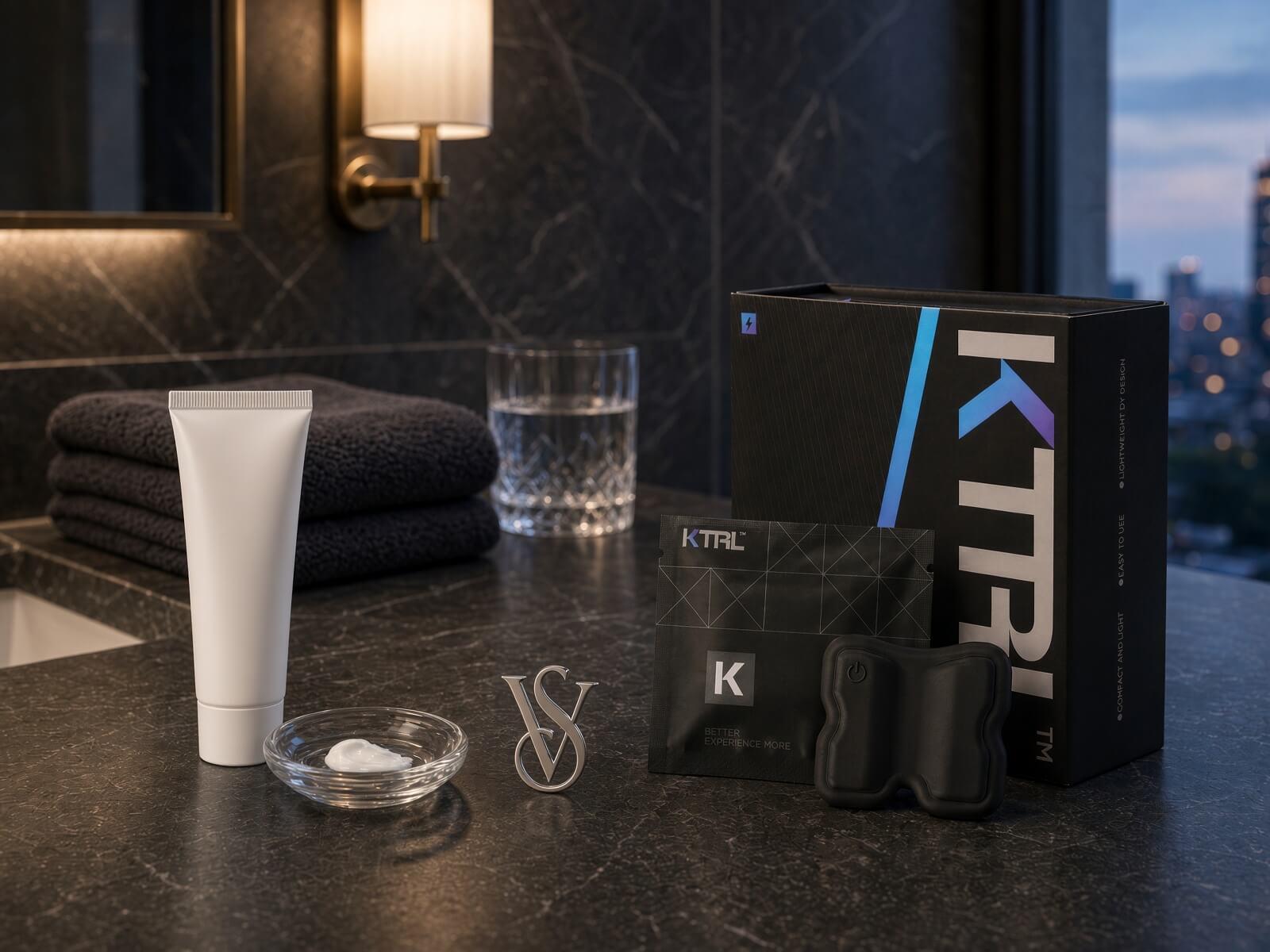
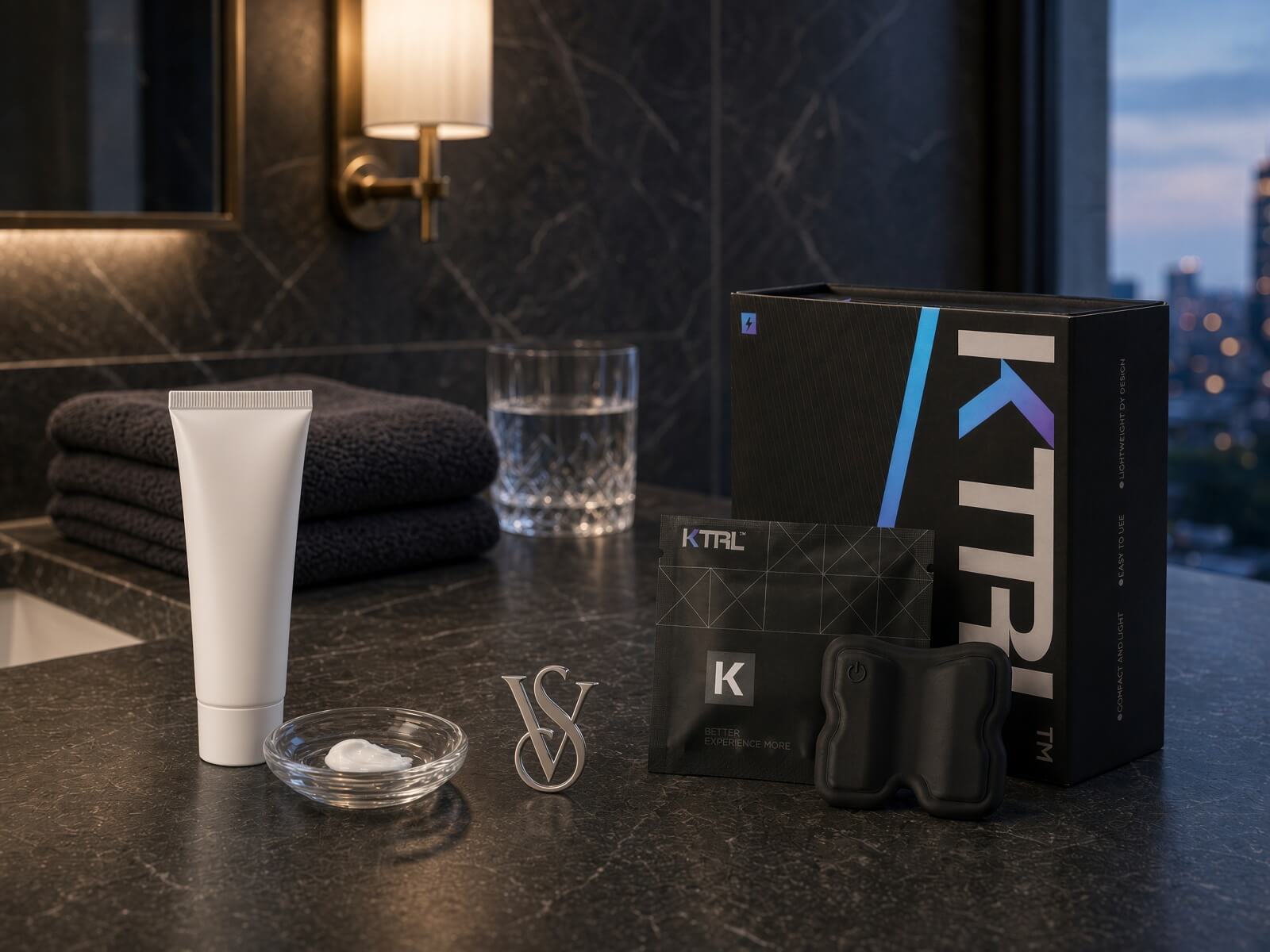
KTRL Portable Smart Patch, model WDC201, is a single-use consumer electronic sensory product for men aged 18–60, inclusive. It is used on designated external skin and is not a medical device. It is not intended to diagnose, treat, alleviate, monitor or prevent a disease or medical condition. Feeling its rhythm does not demonstrate an effect on ejaculation timing. WDC201 user guide
Check the formulation and intended use
For a cream, read the active ingredients, concentration, intended use and instructions for the pack sold in your market. A medicine intended to numb skin for another procedure should not be repurposed for genital use simply because it contains a familiar ingredient. In Mexico, ask a qualified local pharmacist about the exact pack and its permitted use; European clinical guidance does not establish a product's Mexican registration or suitability.
This comparison explains the label questions to resolve, rather than providing a universal cream application routine. If the permitted area, amount or contact precautions are unclear, ask a pharmacist or the manufacturer before use. Do not fill those gaps with instructions for another cream or a spray.
Keep container size separate from the application amount
The quantity of product stated in grams on the tube tells you how much it contains, not how much to apply. Follow the measure or amount in the actual instructions. A phrase such as “a small amount” does not justify inventing a gram-based dose, and a larger amount should not be used to pursue a stronger effect.
The EAU discusses lidocaine/prilocaine creams and metered-dose sprays in separate subsections. A spray's measured actuations, waiting time or approval status cannot be transferred to a cream. For that different format, see the KTRL and delay spray comparison.
Compare preparation, use and cleanup
A cream requires control of the formulation and its residue; KTRL requires correct skin contact and monitoring of the patch. Consider the whole routine, including what you must do after use.
Practical tasks for a delay cream and KTRL WDC201 TaskDelay creamKTRL WDC201 Before applicationConfirm the ingredients, intended use and labelled amount.Check suitability, the package and patch condition. ApplicationSpread only where the exact instructions permit.Place on the designated clean, dry, intact external skin. Waiting or removalFollow that product's contact and residue-removal instructions.Follow the patch's placement and activation instructions. During useMonitor unwanted effects and contact with a partner.Monitor comfort and cumulative powered-on time. After useRemove residue as instructed and store the container correctly.Switch off, gently remove and arrange appropriate disposal.Basis: the exact cream's instructions govern its routine; EAU guidance explains the topical-anaesthetic category, and the KTRL guide defines the patch's requirements. The table does not rank effectiveness or establish compatibility.
KTRL's skin-contact materials include conductive gel and TPE insulating foam. No separately applied cream is required for its stated sensory role. The patch still makes skin contact, so its material-related and skin-condition restrictions remain relevant.
The patch's time and single-use limits
KTRL allows a maximum of 30 minutes of cumulative powered-on time in the same use. Switched-off periods do not count; restarting continues the existing total. For a same-use adhesion or position adjustment, switch off before removal. That adjustment does not permit another session with the used patch.
Stop immediately for pain, stinging, burning, redness, swelling, itching or other obvious discomfort; switch off and gently remove the patch. If symptoms persist, discontinue further use and consult a qualified professional. Read the first-use checklist and placement and skin-preparation explanation for the full process.
Residue, partner contact and combining products
With a topical anaesthetic cream, what remains on the skin can matter to both people. EAU and NHS guidance explain that transfer can reduce a partner's sensation. Waiting alone should not be assumed to resolve every contact concern. 1 2
Check contact precautions for both people
Read whether the formulation permits the intended type of contact and what washing, wiping or other removal instructions apply. EAU discusses washing away residual active ingredient or using a condom to reduce transfer with the formulations it describes. This does not establish that every cream is compatible with every condom material; check both exact products' instructions.
Check ingredient allergies for both partners. EAU advises against lidocaine/prilocaine products if either partner is allergic to a constituent, and advises couples seeking pregnancy not to use topical products containing these ingredients. These conditions concern the named ingredients, not an assumption that all creams have the same formulation.
Discuss contact precautions before use. If either person experiences unwanted numbness, irritation or pain, stop contact and follow the product's instructions. Seek qualified advice for persistent or concerning symptoms.
Can a delay cream and KTRL be used together?
Do not assume a cream is compatible with KTRL. KTRL must not be used when treatment or medicines may affect skin sensation, local reactions or judgement about safe use. An anaesthetic cream is not exempt from that restriction. A pharmacist can clarify the cream's ingredients and label, but advice does not waive either product's prohibited-use conditions. KTRL use restrictions
The patch's contact area must be clean, dry and intact. Do not put cream beneath it, use cream to improve adhesion or move the patch away from its permitted position to avoid the cream. Separate positions do not prove compatibility. If suitability is uncertain or either set of instructions excludes the circumstances, do not combine the products.
Estimate cost without inventing a cream dose
Compare the cost of applications you can actually use within the instructions and before expiry. Tube size alone does not tell you that number.
Cream cost per application = delivered container cost ÷ permitted applications actually usable before expiry. If the label specifies a measurable gram dose, container grams divided by grams per application gives an initial capacity estimate. Allow for loss, expiry, any after-opening limit and all use limits. This calculation uses the labelled dose; it must never be used to choose one.
A hypothetical budget example in Mexican pesos
The following figures are invented for arithmetic only. They are not current prices, a real cream label or cream-use instructions. The example is dated 10 October 2026.
Hypothetical costs, in MXN AssumptionCalculationEffective cost A MXN 300 cream container provides 20 permitted applications, all used before expiry.MXN 300 ÷ 20MXN 15 per application. The same container is bought, but only five permitted applications are used before expiry.MXN 300 ÷ 5MXN 60 per application. A separate three-patch pack costs MXN 360 delivered; all three patches are used.MXN 360 ÷ 3MXN 120 per occasion.Source: the stated hypothetical assumptions and arithmetic, not a retailer or product label. Replace every assumption with the actual delivered price and usable quantity. A cheaper application does not establish the same sensation, safety or result. The ownership-cost comparison explains how to include unused stock and other supplies.
Frequently asked questions
Choose a routine you can follow within its restrictions. For a cream, consider the exact ingredient strategy, measurement and residue handling; for KTRL, consider whether an added rhythmic sensation and a wearable patch suit your preferences.
Can I use a spray's amount or waiting time for a delay cream?
No. A cream and a metered spray are different formulations and delivery formats. Use the exact cream's instructions, and resolve unclear directions with a pharmacist or manufacturer before use.
Does waiting mean the cream cannot affect a partner?
No. Waiting does not by itself confirm that no active residue can transfer. Follow the product's contact and removal precautions, including any specific condom-material conditions.
Does a cream's tube size tell me its cost per use?
Only when you also know its permitted application amount and how many applications you will actually use before expiry. Do not turn a budgeting estimate into a dose instruction.
Is changing formats enough for a persistent sexual concern?
A persistent or distressing sexual difficulty is a reason to seek professional assessment. KTRL's sensory role does not replace that assessment or establish a treatment effect.
References
Sources checked on 13 October 2026. EAU and NHS discuss clinical categories and contact considerations; neither source establishes the suitability of every marketed cream or compatibility with KTRL. The cost table is a hypothetical calculation.
European Association of Urology. Sexual and Reproductive Health: Disorders of Ejaculation, 2026 guidance, section 6.2.6.b.3.a on lidocaine/prilocaine cream. Category evidence, transfer, ingredient allergy and precautions for couples seeking pregnancy; the following subsection addresses sprays separately.
NHS. Ejaculation problems. General discussion of topical anaesthetics and partner transfer. Page last reviewed 9 February 2023; UK health-information context.
KTRL. WDC201 user guide. Product identity, contact materials, suitability, cumulative time and single-use rules. Its stated basis is the English 3c instructions, updated 22 May 2026, and confirmed website instructions.