Male sexual desire can change from one week or context to another because libido is shaped by more than one system. Stress, fatigue and sleep disruption, mood, medicines, health, relationship dynamics, privacy, and expectations may all be relevant. A change in desire does not automatically identify a hormone problem or a loss of attraction.
Libido is a pattern, not an on–off switch
Desire can be strong, quiet, spontaneous, context-dependent, or slower to appear. Some men notice interest before any sexual contact. Others notice it after affection, privacy, or sensory engagement begins. A lower level than usual may be temporary or persistent.
UCSF recommends evaluating onset, severity, situational factors, medical context, other sexual concerns, medicines, psychological history, and relationship circumstances when low desire is troubling (UCSF Department of Urology).
That is why the first question should be “What changed around the change?” rather than “Which single thing is wrong?”
Use a four-layer context map
Layer
Questions to ask
Examples of relevant context
Body and energy
Has my general energy, health, pain, sleep, or medication changed?
Fatigue, illness, sleep disruption, medicine effects, hormone questions
Mind and mood
Am I preoccupied, depressed, anxious, grieving, or under sustained pressure?
Work stress, low mood, worry, body image, fear of sexual difficulty
Relationship
Do I feel emotionally safe, wanted, heard, pressured, resentful, or distant?
Conflict, unresolved hurt, desire discrepancy, fear of disappointing a partner
Environment and routine
Is there enough privacy, time, rest, and freedom from interruption?
Travel, caregiving, work schedules, crowded homes, rushed timing
The map is intentionally broad. Several layers may change together, and the same context may affect people differently.
Stress can compete with sexual interest
Stress can occupy attention, change mood, reduce emotional availability, and leave little energy for intimacy. Mayo Clinic lists stress and fatigue among factors that can accompany loss of sex drive in men (Mayo Clinic).
A 2026 narrative review also describes physiological and psychological pathways linking acute and chronic stress with male sexual health, while distinguishing different forms and durations of stress (PubMed). A narrative review cannot tell an individual that stress is the cause. It supports including stress in the history.
Ask whether desire changes when the pressure eases, during weekends, after a major deadline, or in a different setting. Variation can be useful information without becoming proof.
Sleep and fatigue deserve their own line in the history
Poor sleep may matter through fatigue, mood, attention, health, and—in some conditions—hormonal pathways. Mayo Clinic notes fatigue as a common context for lower sex drive and identifies obstructive sleep apnea as one condition that can be associated with low testosterone (Mayo Clinic).
Research on sleep and male reproductive hormones remains nuanced. A review describes the evidence linking insufficient, misaligned, or disrupted sleep with andrological health as still developing (PubMed). A meta-analysis found different testosterone effects for total versus short-term partial sleep deprivation, underscoring why “bad sleep always lowers testosterone” is too simple (PubMed).
Track sleep quality and daytime fatigue rather than diagnosing a hormone issue from tiredness alone.
Mood can change desire—and desire changes can affect mood
Depression, anxiety, grief, and emotional exhaustion may reduce interest or make intimacy feel effortful. Some medicines used for mood or other health conditions can also affect libido. Mayo Clinic lists depression and medication side effects among possible contexts for lower male sex drive (Mayo Clinic).
The direction can also reverse. A persistent sexual concern may contribute to worry, lowered confidence, or avoidance. Tell a clinician about both the mood timeline and the desire timeline. Do not stop or change prescribed medicine without the prescriber.
Relationship context matters without making a partner “the cause”
Desire may feel different when affection is warm, conflict is unresolved, pressure is high, or one partner feels repeatedly rejected. UCSF recommends evaluating relationship stressors, communication, partner-specific patterns, and the kinds of sexual activity each person actually wants (UCSF).
Avoid two shortcuts:
· “Lower desire proves I no longer love my partner.”
· “My partner must be responsible for my lower desire.”
Both turn a complex pattern into blame. The relationship may be one part of the context, and both people still deserve respectful communication.
How lower desire can create tension at home
One partner may interpret less initiation as rejection. The man may avoid affection because he fears it will create an expectation for sex. The partner then feels even more distant, while he feels increasingly monitored. What began as a desire change becomes a household pattern of silence, resentment, or arguments.
Try a direct separation:
“My sexual interest has felt lower lately, but I do not want you to read that as a complete statement about my love or attraction. I am looking at stress, sleep, mood, health, and our context. Can we keep affection and pressure separate while I understand the change?”
A partner can describe their needs without demanding a diagnosis:
“I miss feeling close, and I can say that without making you prove desire on command. Let’s decide what kind of connection feels welcome now.”
Use a short context log, not a daily score
For one or two weeks, write brief notes only when something relevant changes:
· general interest in sexual activity;
· sleep quality and daytime energy;
· major stress or mood shifts;
· affection, conflict, and relationship pressure;
· erection, ejaculation, orgasm, or pain concerns;
· medicine, substance, illness, or health changes; and
· whether privacy and time were available.
Look for questions, not conclusions. “Desire was lower during the week of severe sleep disruption” is useful. “Sleep caused my low libido” goes beyond what the log can establish.
When qualified guidance is appropriate
Consider a healthcare professional when the change is sudden, persistent, recurrent, distressing, or accompanied by other symptoms. UCSF says evaluation may be indicated when lack of interest is persistent or troubling and emphasizes detailed sexual, relationship, medicine, and health history (UCSF). Mayo Clinic likewise advises speaking with a doctor about concerning or sudden loss of sex drive (Mayo Clinic).
Bring the context log. A qualified clinician can decide whether examination, medication review, hormone testing, sleep evaluation, mental-health support, or another route is appropriate.
Where a private routine can fit
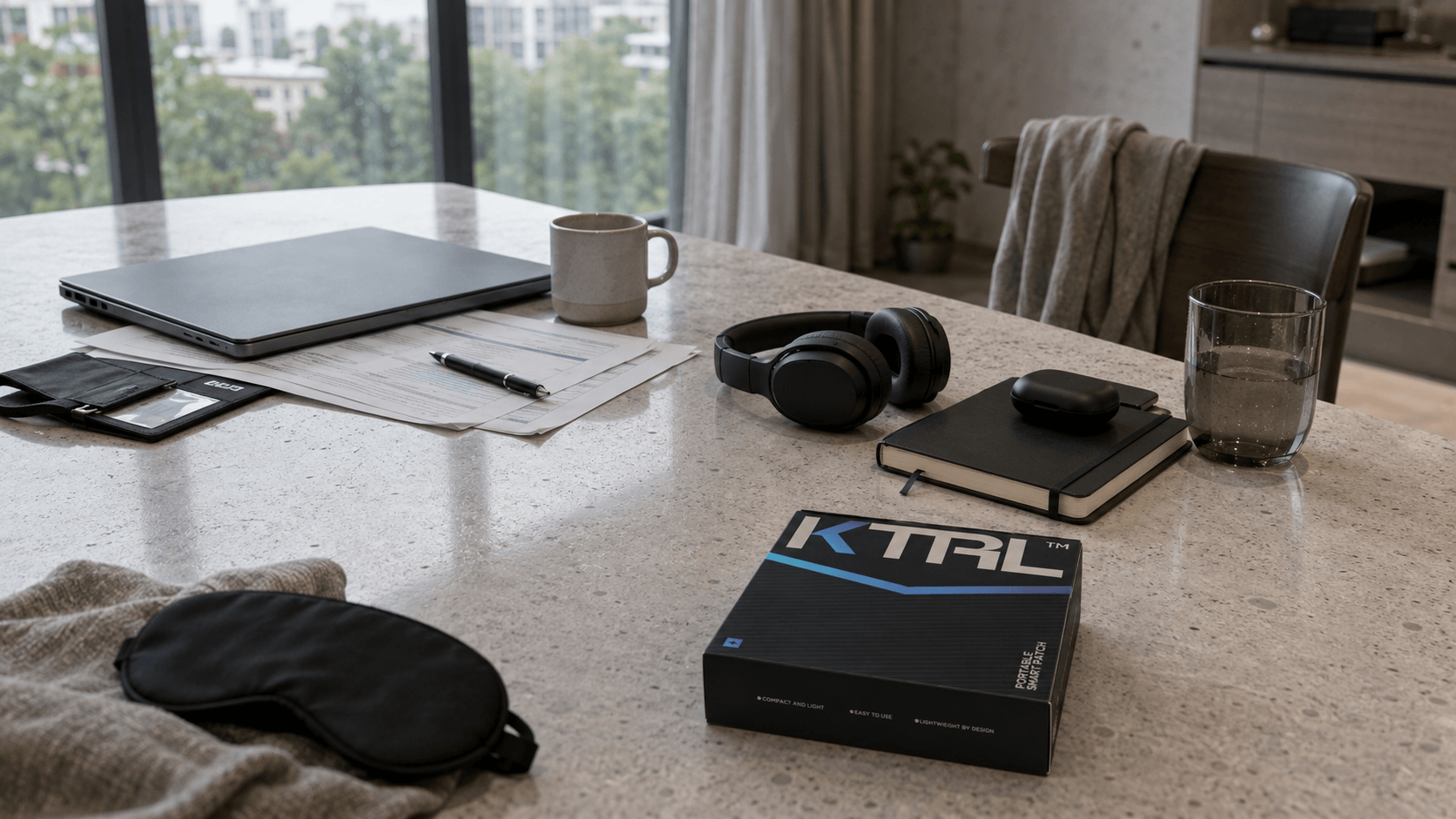
If interest is present and the goal is a calmer, more intentional adult experience, the discreet male wellness routine guide can help a couple choose privacy, communication, sensory focus, and preparation that match their current preferences.
Join the KTRL email list for future no-shame education and verified product facts before deciding.
KTRL Portable Smart Patch is a consumer lifestyle product for adult external use; it is not intended to diagnose or treat a medical condition, individual experiences vary, and users should follow the printed instructions and seek qualified professional advice for persistent or distressing concerns.
Frequently asked questions
Can stress lower a man's sex drive?
Stress may be relevant through attention, mood, fatigue, and physiological pathways. Its presence does not prove it is the only cause of a desire change.
Does poor sleep always lower testosterone or libido?
No. Sleep research is nuanced, and effects vary by sleep problem, duration, health, and study design. Track fatigue and sleep context, then seek qualified evaluation when concerns persist.
Does lower desire mean attraction is gone?
No. Desire can change with body, mind, relationship, and environmental context. Attraction should be discussed rather than inferred from one signal.
When should I talk to a doctor?
Seek guidance when the change is sudden, persistent, distressing, or accompanied by other physical, mood, erection, pain, sleep, or health concerns.